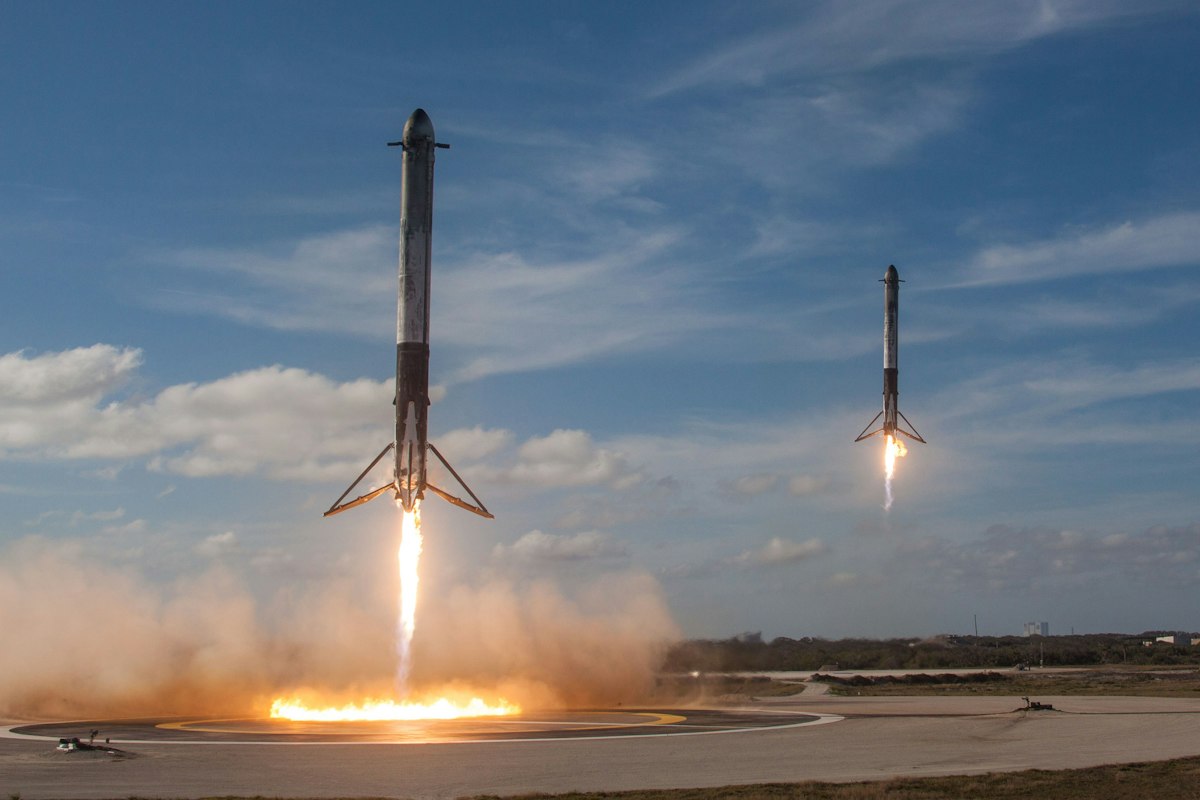
SpaceX, a pioneer in the private aerospace sector, made history by conducting the first all-civilian spaceflight known as Inspiration4. This groundbreaking mission marked a significant milestone in human space exploration, setting the stage for future commercial spaceflights. The event demonstrated the possibility of space travel for ordinary people, beyond the realm of professional astronauts, paving the way for a new era in space tourism.
The Mission: Inspiration4
Launched from the Kennedy Space Center in Florida, the Inspiration4 mission sent four civilians into orbit aboard a Crew Dragon capsule. Unlike previous space tourists who visited the International Space Station (ISS), this crew orbited the Earth for three days at an altitude higher than the ISS. The mission was commanded by billionaire Jared Isaacman, who purchased the flight to raise awareness and funds for St. Jude Children's Research Hospital.
The Crew
The crew represented four pillars: Leadership, Hope, Generosity, and Prosperity. Jared Isaacman represented Leadership. Hayley Arceneaux, a physician assistant at St. Jude and a childhood cancer survivor, represented Hope. Chris Sembroski, a data engineer and Air Force veteran, represented Generosity. Dr. Sian Proctor, a geoscientist and artist, represented Prosperity. Their diverse backgrounds highlighted that space is becoming accessible to a broader range of people.
Technological Achievements
The mission utilized SpaceX's Falcon 9 rocket and the Crew Dragon spacecraft, which operated autonomously. This demonstrated the reliability and safety of SpaceX's automated systems, reducing the need for professional pilots. The spacecraft also featured a unique glass dome, or cupola, providing the crew with panoramic views of Earth and space, a feature designed specifically for tourism.
Implications for the Future
Inspiration4 proved that private companies can successfully execute complex orbital missions with non-professional crews. This opens the door for a burgeoning space tourism industry. It also has implications for scientific research, as future missions could carry researchers and experiments from institutions that previously lacked access to space. As costs decrease and technology advances, we are likely to see more civilians venturing into the final frontier.
Sources:
- Inspiration4: The First All-Civilian Mission to Orbit, SpaceX
- Space Tourism: The Next Frontier, National Geographic
- The Future of Commercial Spaceflight, NASA